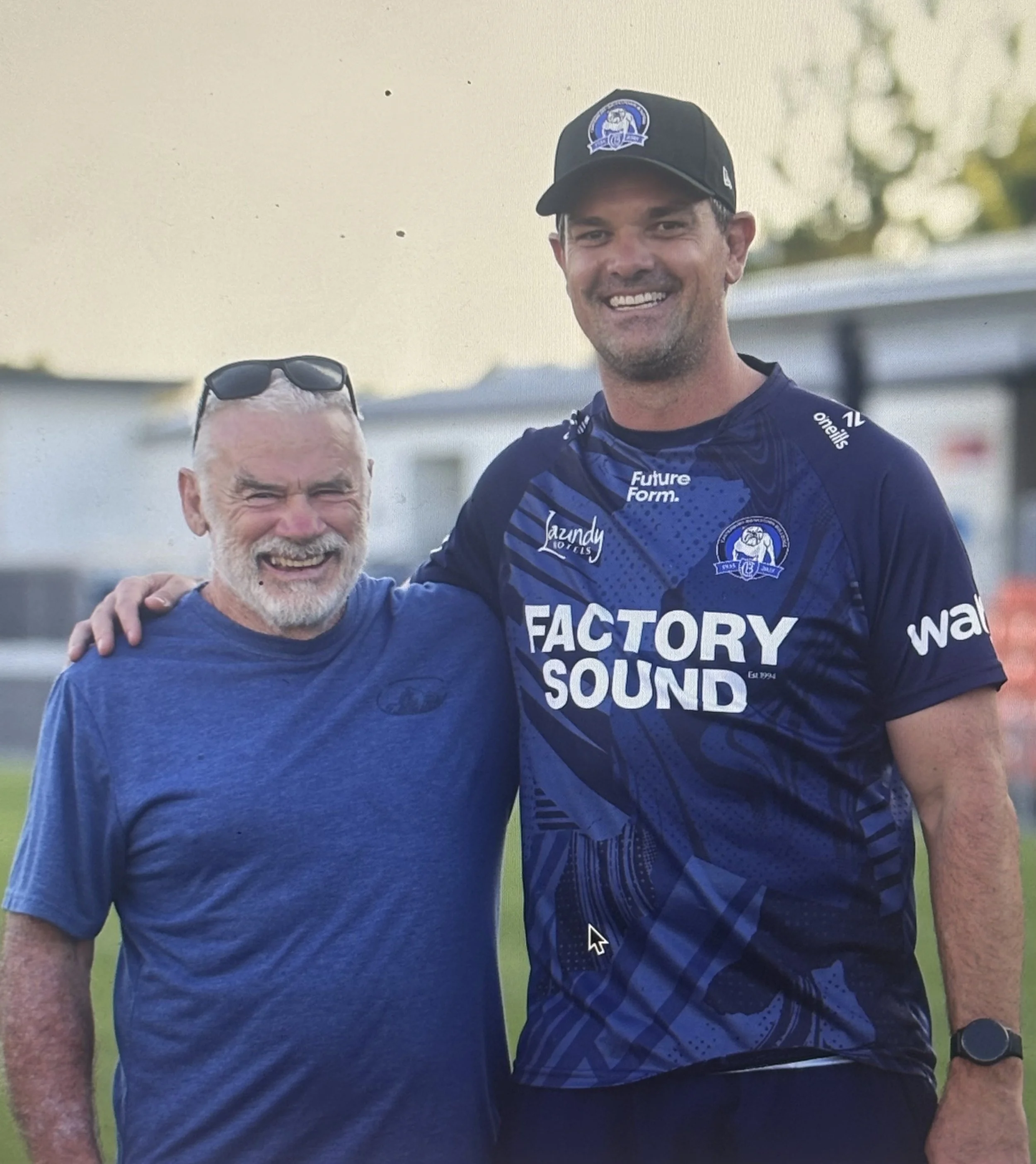
A proud NSW country boy born in Condobolin in 1952, I’ve been incredibly fortunate to have a career that has taken me around the world — but I’ve never forgotten where I came from. Everything I’ve done, in rugby league and beyond it, has fuelled one thing in me: a desire to give back to the communities that shaped me, backed me, and gave me my first opportunities.

I learned early that rugby league is more than a game. It teaches hard work, discipline, teamwork, and resilience — but it also has the power to bring people together. As a coach and leader, I came to understand something even deeper: the best teams, organisations, and communities don’t move forward because of one star player — they move forward because people feel connected, included, and united behind a shared purpose.

My rugby league journey began at Condobolin Primary School, before earning a scholarship to Marist Brothers College Forbes in 1965. In 1970, I moved to Sydney on a scholarship with the Canterbury-Bankstown Rugby League Club while still at school, attending Holy Cross College Ryde. At 18, I was playing school football during the week and backing up for Canterbury’s Second Grade team on the weekend — I was living my dream.

That dream became a 40-year life in rugby league.

I played for Canterbury-Bankstown for 15 years, represented NSW and Australia throughout the 1970s and 1980s, and in 1980 had the thrill of being part of the Bulldogs’ first premiership in 38 years. In 1984, I headed to the UK to play, and within a year I was given the chance to coach Halifax — where we won both the Championship and the Wembley Cup.

I returned to the Bulldogs as First Grade Coach and led the club for 10 years, including the unforgettable 1995 premiership victory — forever known as the Super League War year. In 1997, I took up the role as the inaugural coach of the Melbourne Storm, where we created history by winning a premiership in only our second season in 1999. That same year, I was appointed Coach of Australia.

Across my coaching career, I became one of the most successful Australian coaches, with one of the best win–loss records in the game.

A heart attack while coaching Australia ultimately ended my full-time coaching career, though I later had stints with both the Cronulla-Sutherland Sharks and the Sydney Roosters.

After rugby league, I moved into leadership roles that — at their core — weren’t all that different from coaching. I’ve always been passionate about helping people grow, helping teams work together, and creating environments where people feel valued, included, and capable of achieving more than they thought possible.

One of my proudest post-football chapters was leading NSW Origin Legends as CEO. NSW Origin Legends was a not-for-profit created to support former Origin players, but also to allow rugby league to give back to the regional communities that have produced so many of the game’s greatest talents.

Growing up in Condobolin in the 1960s, my observation was simple: rugby league was often the only thing that invited Indigenous people into the social fabric of the town. That stayed with me, and it shaped the work I wanted to do after football.

As CEO of NSW Origin Legends, I helped lead a not-for-profit built around two things — supporting former players, and using rugby league as a vehicle for opportunity in the regions. We delivered Indigenous job expos for Year 11 and 12 students across NSW, connecting schools with employers and real pathways beyond the classroom.

Through partnerships with the Defence Forces, we also ran a week-long camp at Williamtown RAAF Base, which directly resulted in apprenticeships across trades such as mechanics, electrical and carpentry, as well as pathways into nursing and aged care.

Beyond employment, we backed grassroots community health initiatives — including helping fund the early stages of a mobile ear, nose and throat clinic in Narromine that changed outcomes for kids who otherwise had limited access to services.

We also supported school-to-work programs combining TAFE, school and work experience, creating consistent apprenticeship outcomes year after year — with some programs still running today.

I’ve been blessed with a life in sport, but what drives me now is community: building opportunity, strengthening pathways for young people, and ensuring rugby league continues to be a force for inclusion, connection, and purpose.

CHRIS ANDERSON

FORMER AUSTRALIAN RUGBY LEAGUE PLAYER | PREMIERSHIP-WINNING COACH